

New England Multi-State Real Estate Licensing: NH, ME, MA, VT and Florida
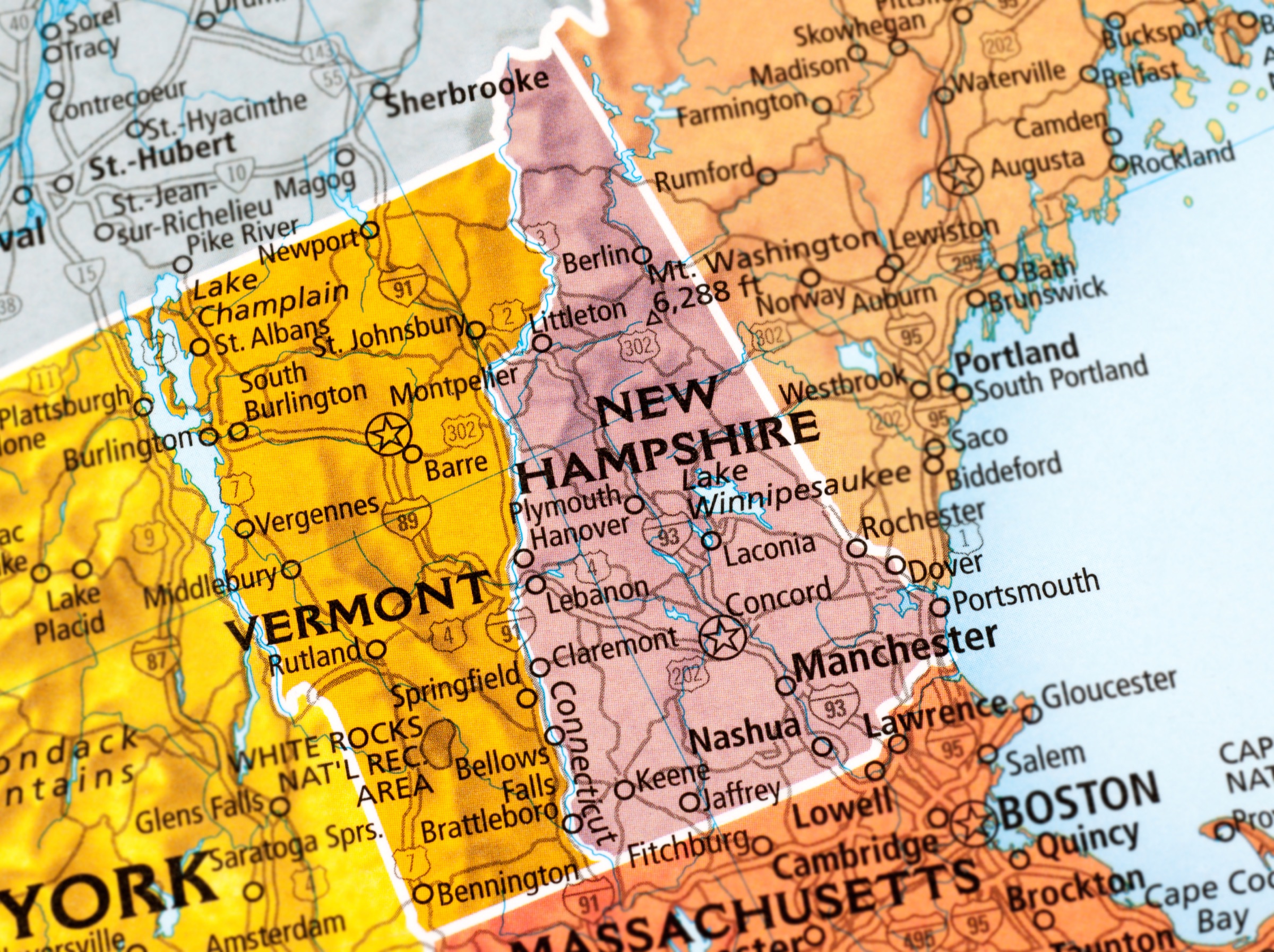
Here is the fact that reorganises how a New England agent should think about licensing, and almost nobody publishes it:
A Massachusetts licensee can add New Hampshire by sitting the New Hampshire state portion only, with no pre-licensing course. A New Hampshire licensee adding Massachusetts gets no reciprocity at all and must satisfy Massachusetts's full requirements, examination included.
The same asymmetry applies to Maine and Vermont licensees. New Hampshire, Maine and Vermont are not on Massachusetts's reciprocity list. Massachusetts is not a hard state to add from; it is a hard state to add to.
If you work near the border and have any choice about the order in which you get licensed, that sentence is worth more than everything else on this page. Get the Massachusetts license while you are getting a license anyway, not afterwards.
Why national sites say New Hampshire has "no reciprocity"
Because New Hampshire does not use the word. The state's mechanism for licensing an already-licensed out-of-state agent is called Recognition. Aggregator sites scan for reciprocity agreements, find none, and publish "New Hampshire: no reciprocity."
That is wrong in the way that matters. New Hampshire accepts Recognition from all states. There is no list to be on.
One related correction. New Hampshire's HB 594, passed in 2023 with applications from May 2024, created a general statutory reciprocity duty across licensed professions. The Office of Professional Licensure and Certification's own FAQ says real estate is not among the 22 prioritised professions. HB 594 did not remove the New Hampshire state exam.
New Hampshire: the Recognition path
An already-licensed out-of-state agent needs:
- Pass the New Hampshire state portion only — 40-plus questions, 1.5 hours — provided your original license came from a full national plus state examination.
- No pre-licensing education. The 40-hour salesperson course applies to first-time licensees, not to Recognition applicants.
- A certificate of good standing from your current state.
- A background check, $25.
- A sponsoring broker in New Hampshire.
Broker applicants are reported to need one calendar year licensed elsewhere. That comes from a single source and we have not confirmed it against the commission. Verify before planning around it.
Maine licensees, read this. Maine Sales Agent licenses are reported not to be accepted for New Hampshire Recognition. A Maine Associate Broker converts to a New Hampshire Salesperson, and a Maine Designated Broker to a New Hampshire Broker. Also single-source, and worth confirming directly before you pay for anything.
For a first New Hampshire license rather than Recognition: 40 hours pre-licensing for salesperson or 60 for broker, the PSI exam in national and state portions, 70 to pass on each, and renewal every two years with 15 hours of continuing education, 3 core and 12 elective. Our New Hampshire licensing page covers the first-license route, and the new agent path covers what happens after you pass.
Massachusetts: the twelve-jurisdiction list
Massachusetts publishes an actual reciprocity list with twelve entries: Connecticut, Rhode Island, West Virginia, Nebraska, Iowa, Tennessee, Mississippi, Colorado, Georgia, Pennsylvania, New Mexico, and Oklahoma licensees with two or more years.
New Hampshire, Maine and Vermont are not on it. If you hold one of those three, adding Massachusetts means the full requirements: 40 hours of pre-licensing for a salesperson, the PSI examination of 100 to 120 questions over four hours, and 70% to pass. Brokers add a further 40 hours.
Massachusetts also requires a certified letter of good standing, a notarised CORI form and a passport photo. Broker applicants need a $5,000 surety bond and three years of affiliation. Renewal is every two years with 12 hours of continuing education.
Maine: effectively open, but you become an Associate Broker
Maine maintains no reciprocity list in any practical sense. Title 32 section 9857 authorises reciprocal agreements, but the route agents use is simpler: pass the Maine Law exam.
- Pass the Maine Law examination. Our sources disagree on the number of scored items, one describing 40 and another 50, so treat the item count as unconfirmed and check with the Commission. The passing score is 75 and the sitting is 1.5 hours.
- Verification of licensure in good standing from every state in which you hold a license, with certificates less than 30 days old.
- A criminal records check.
- $121, with the application filed within one year of passing.
The conversion detail nobody warns people about: an out-of-state salesperson does not become a Maine Sales Agent. You come in as a Maine Associate Broker. That affects what continuing education applies and what happens if you later take that Maine license into New Hampshire.
Maine's own Sales Agent license is a two-year, non-renewable credential by design; associate and designated brokers carry 21 hours of continuing education including a 3-hour core course. Maine's pre-licensing hours are not published by the Commission.
Vermont: equivalency is published, and the state exam is never waived
Every applicant sits the Vermont state examination. There are no exceptions. Not for endorsement, not for Fast Track, not for twenty-year licensees.
What endorsement does waive is meaningful. If your state has been determined "substantially equivalent," Vermont waives the national examination and the 40-hour pre-licensing course. Equivalency is a published per-state determination, so you can look your answer up instead of asking for a ruling.
The published exceptions for salespersons: Indiana and Rhode Island are not substantially equivalent, and California, New York, Puerto Rico and West Virginia licensees are separately required to take the national exam. For brokers, the non-equivalent states are Indiana and Alaska. New Hampshire, Massachusetts and Maine do not appear on either list, but check the current published determination before relying on that.
The Fast Track route requires three or more years actively licensed and in good standing elsewhere and waives several requirements, but still requires the Vermont state exam. Licensees entering by endorsement are exempt from Vermont's 8-hour post-licensure requirement and from continuing education for their first renewal; first-time Vermont licensees must complete those 8 hours within 90 days.
Florida: ten states, and only two of them are in New England
Florida operates mutual recognition with ten states. The official DBPR list is Alabama, Arkansas, Connecticut, Georgia, Illinois, Kentucky, Mississippi, Nebraska, Rhode Island and West Virginia.
Connecticut and Rhode Island are the only New England members. New Hampshire, Maine, Massachusetts and Vermont are not included. Some 2026 sites still list Oklahoma; DBPR states that agreement was dissolved in February 2016. The tenth state is Kentucky, not Oklahoma.
Where mutual recognition does apply, the conditions are strict:
- You must not be a Florida resident when you apply.
- Your original license must have come from full education and examination, not from your own state's reciprocity or recognition route.
- You pass a 40-question Florida law examination, 30 out of 40 to pass.
Without mutual recognition, Florida means the full route: 63 hours of pre-licensing, the Pearson VUE examination scored out of 100 points with 75 to pass, then 45 hours of post-licensing education before your first renewal and 14 hours every 24 months after that.
State by state at a glance
| State | Pre-licensing (first license) | Exam | Pass | Already licensed elsewhere | Renewal / CE |
|---|---|---|---|---|---|
| New Hampshire | 40 hrs salesperson / 60 broker | PSI, national + state | 70 on both portions | Recognition from all states. State portion only, 40+ questions, 1.5 hrs. No course. Good standing, $25 background check, sponsoring broker | 2 yrs; 15 hrs (3 core + 12 elective) |
| Massachusetts | 40 hrs salesperson, +40 broker | PSI, 100-120 questions, 4 hrs | 70% | Reciprocity with 12 jurisdictions only. NH, ME and VT are not among them: full requirements including examination | 2 yrs; 12 hrs |
| Maine | Sales Agent course; hours not published by the Commission | Pearson VUE; general 80 scored plus a separate Maine Law section | 75 scaled | Maine Law exam route, effectively open. Good-standing verification from every state held, records check, $121. Out-of-state salespersons enter as Associate Broker | Sales Agent license is 2-yr non-renewable; associate/designated broker 21 hrs incl. 3-hr core |
| Vermont | 40 hrs | National + VT state exam, no exceptions | Not published | Endorsement by published equivalency waives the national exam and the 40-hr course. Fast Track needs 3+ yrs licensed. VT state exam always required | 2 yrs; 8 hrs post-licensure within 90 days of first license (endorsees exempt) |
| Florida | 63 hrs | Pearson VUE, 100 points | 75/100 | Mutual recognition with 10 states. From New England, only CT and RI. Non-resident requirement; 40-question law exam, 30/40 | 24 mo; 45-hr post-licensing before first renewal, then 14 hrs |
Where the published record runs out
Five things here are commonly stated as fact and are not actually published. We are not going to guess at them.
- Maine's pre-licensing hours. The figure repeated across the internet is not on maine.gov. Confirm with the Maine Real Estate Commission before you buy a course.
- Vermont's fees. Not confirmed from a state source. Check the Vermont Office of Professional Regulation directly.
- Vermont's passing score. Also not published.
- New Hampshire's application fee. Sources conflict between $90 and $99, and the OPLC fee page cannot be retrieved reliably by automated tools. Open it in a browser and read the current number yourself before budgeting.
- The Maine Law exam item count. Sources give 40 and 50 scored items. The passing score of 75 is consistent; the item count is not.
Everything in a licensing article decays. Confirm anything you are about to pay for with the state commission itself.
What it costs, roughly
- New Hampshire — about $490 all in: course around $300, PSI exam $66, background check $25, plus the disputed application fee above.
- Massachusetts — roughly $485 to $965. Application $31; the license itself $103 to $150, prorated against your date of birth.
- Maine — roughly $300 to $600. Application and records check $121, exam $85.
- Vermont — not confirmed. Get the current schedule from the state.
- Florida — roughly $270 to $700. DBPR $83.75, fingerprinting $50 to $80, exam $36.75.
How to sequence it if you have a choice
- If Massachusetts is plausibly in your future, get it early. It is the hardest of the four to add later and the easiest to add from, because a Massachusetts license opens New Hampshire on the state portion alone.
- Do not let a New Hampshire-only license be the plan if you work the border. A referral fee is what you collect when you cannot write the deal.
- If you hold Maine, check which Maine license you hold before planning a New Hampshire application.
- Vermont is cheap in effort if your state is equivalent, but budget for the state exam regardless of experience.
- Florida is a full rebuild for a New England agent. Plan it as a project, and remember you cannot apply as a Florida resident.
Plan the license transfer alongside any brokerage change rather than after it. The mechanics are in how to switch real estate brokerages.
The brokerage side of multi-state
Holding licenses in several states raises a practical question about cost. At a cloud brokerage like eXp Realty you are affiliated with one company across state lines rather than joining a separate office in each, with a managing broker assigned per state. Confirm the per-state fee treatment with the brokerage before you count on it.
The economics that stay constant: 80/20 to cap, $85 a month, $25 broker review per transaction. Bean Group's Mega Team cap with eXp Realty is $4,000 against eXp's standard $16,000, which matters more the more states you work. That is the eXp commission split cap; the Bean Group team split is a separate line item and is not capped. Bean Group's partnership plans set out the ladder and the platform page covers the tools that follow you across state lines. Experienced agents weighing a move should start here; choosing who to name as your sponsor is a separate decision, covered in what an eXp sponsor actually is.
Check that your sources are current
eXp program specifics change and a lot of what circulates online is stale. Verify any eXp figure here against eXp's own reference at exptoolkit.com/revenueshare. The parent company is now AGNT, Inc. (Nasdaq: AGNT); the eXp Realty brokerage brand is unchanged. Licensing rules should be verified with the relevant state commission, not with us.
Frequently asked questions
Does New Hampshire have reciprocity with other states?
New Hampshire does not use the term reciprocity for real estate; it uses Recognition, which is why aggregator sites report that it has none. Recognition is accepted from all states. You sit the New Hampshire state portion only, around 40 questions in 1.5 hours, with no pre-licensing course, provided your original license came from a full national and state examination.
I have a New Hampshire license. Can I get a Massachusetts license through reciprocity?
No. Massachusetts maintains reciprocity with twelve jurisdictions and New Hampshire is not one of them, nor are Maine and Vermont. You must satisfy the full Massachusetts requirements, including 40 hours of pre-licensing for a salesperson and the state examination.
Which states does Massachusetts have real estate reciprocity with?
Twelve jurisdictions: Connecticut, Rhode Island, West Virginia, Nebraska, Iowa, Tennessee, Mississippi, Colorado, Georgia, Pennsylvania, New Mexico, and Oklahoma licensees with two or more years. No other New England state appears on the list.
How does an out-of-state agent get a Maine real estate license?
By passing the Maine Law examination rather than through any reciprocity list, plus verification of good standing from every state you hold a license in with certificates less than 30 days old, and a criminal records check. The fee is $121, filed within one year of passing. An out-of-state salesperson is licensed in Maine as an Associate Broker.
Can I skip the Vermont state exam if I am already licensed?
No. Every applicant sits the Vermont state examination and there are no exceptions, including under Fast Track. Endorsement can waive the national examination and the 40-hour pre-licensing course if your state is on Vermont's published substantially-equivalent list.
Does Florida have mutual recognition with any New England state?
Only Connecticut and Rhode Island. Florida's ten states are Alabama, Arkansas, Connecticut, Georgia, Illinois, Kentucky, Mississippi, Nebraska, Rhode Island and West Virginia. Some sites still list Oklahoma; that agreement was dissolved in February 2016. New Hampshire, Maine, Massachusetts and Vermont agents face Florida's full 63-hour education and examination route.
If you are planning a second license
Confirm current requirements with the state commission, then work out whether your brokerage arrangement supports working in two markets. Start a conversation here, or read the New Hampshire licensing page if New Hampshire is your first.