

Virtual Staging: What Works, What It Costs, and What You Must Disclose
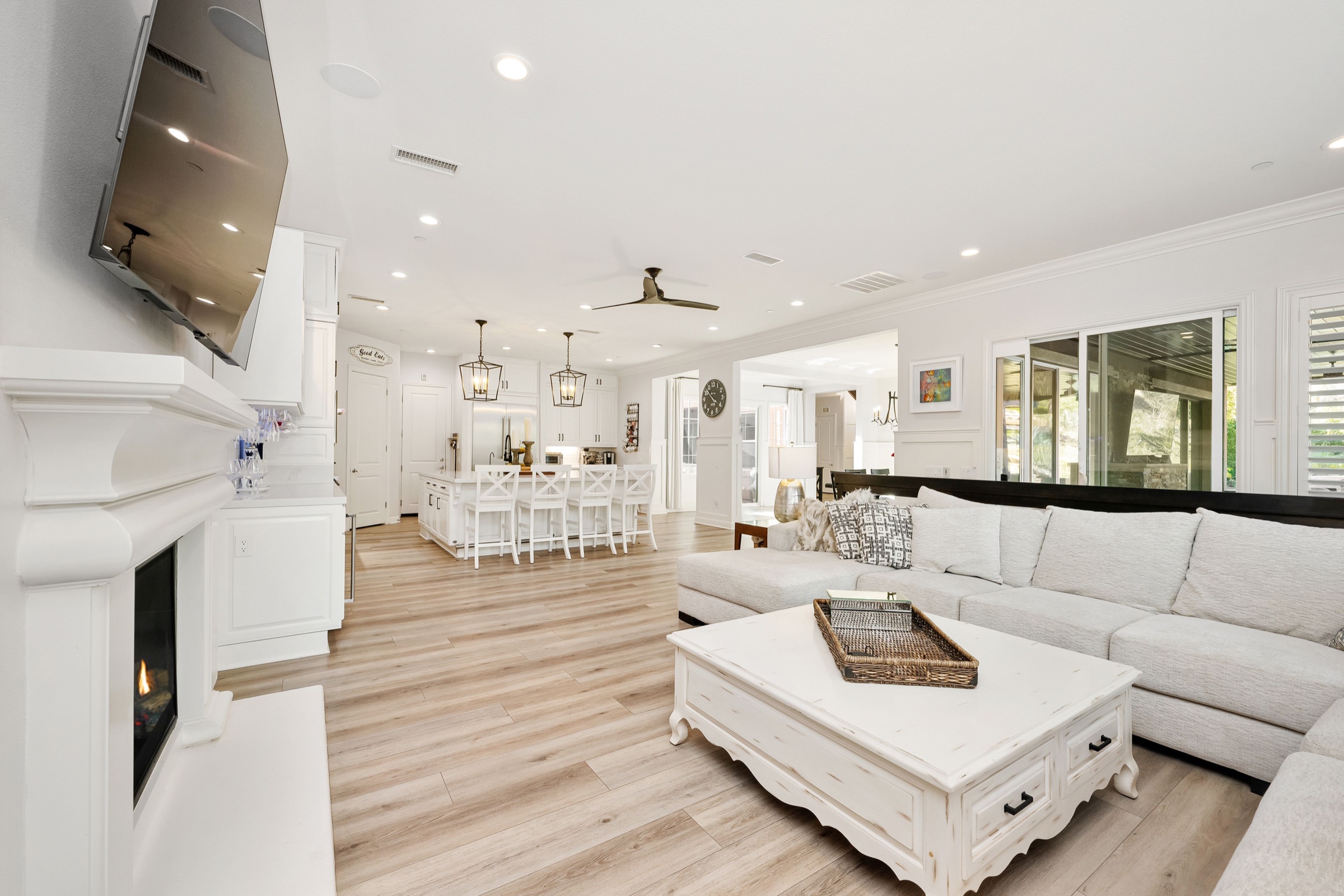
Virtual staging fills empty rooms for a fraction of what furniture costs. The case for it is real. The statistics usually quoted alongside it are not.
What the staging data actually says
The dramatic "sells faster" percentages that circulate in staging marketing have no study behind them. NAR's 2025 Profile of Home Staging gives a far more modest picture: about 49% of sellers' agents observed any reduction in time on market at all, and 29% reported buyers offering a 1 to 10% increase in dollar value. Median cost of professional physical staging was $1,500.
A modest and inconsistent effect, at a real cost. Virtual staging is attractive because it delivers part of that effect for roughly $20 to $50 per image.
Which rooms to stage
- Living room — the first photo most buyers see
- Primary bedroom — scale is hardest to read in an empty bedroom
- Kitchen or dining — a table setting establishes how the space is used
- Home office — worth showing in a market where remote work drives moves
Staging every room is how a listing starts to look synthetic.
Rules for results that hold up
- Match scale — oversized furniture in a small room reads as fake immediately
- Respect the light — shadows on added furniture must match the window direction in the original photo
- Coordinate colour — furniture should work with the actual floors, walls and fixtures
- Leave floor space — buyers need to mentally walk through the room
- Keep detail light — a plant and a few books add warmth; full set dressing does not
What it costs
| Type | Typical cost per image | Trade-off |
|---|---|---|
| AI-generated | Roughly $20–30 | Fast, cheapest, weakest on unusual room geometry |
| Human-edited | Roughly $30–50 | Better quality control, one to two day turnaround |
| DIY platforms | Subscription-based | Cheapest at volume, and it will look like you did it yourself |
Prices move constantly and vendors rebrand or disappear, so treat this as a budgeting range rather than a shopping list. Get a sample image of your own listing before committing to a provider.
Disclosure: check your own state and MLS
Disclose virtual staging. That part is not controversial.
What varies is the rule that requires it. There is no single national standard: the obligation comes from your state's licensing and unfair practices law, your MLS's photo rules, and the prohibition on misrepresentation in the REALTOR® Code of Ethics. New Hampshire, Massachusetts, Maine and Rhode Island do not treat this identically, and MLS photo policies differ within each.
Practical floor, regardless of jurisdiction:
- Label every altered image clearly, in the image itself where the MLS allows it
- Include the unstaged photo of the same room in the same gallery
- Never alter or remove a structural element, and never obscure a defect — that is misrepresentation in every state on this list
Confirm the requirement with your managing broker before your first virtually staged listing goes live.
Support at Bean Group
Photography standards and listing presentation materials live in our marketing playbooks, and broker support to answer the disclosure question for your state is part of what experienced agents joining Bean Group get. The rest of the marketing stack is on the technology platform page.
Virtual staging works when it helps a buyer visualise potential. It stops working the moment it misleads one.