
Relocation & Living · New Hampshire
Exeter vs. Portsmouth: Compare homes and daily life
Compare Exeter and Portsmouth homes, travel and property research. Find current listings and make a practical two-town shortlist.

On this page
- Exeter vs. Portsmouth at a Glance
- Housing and Search Experience
- Compare dated market reports
- Historic-District and Renovation Considerations
- Transportation and Daily Travel
- Water and Outdoor Setting
- How to Choose Between Exeter and Portsmouth
- Exeter vs. Portsmouth FAQs
- Explore Both Markets
- Search both communities
Exeter and Portsmouth both offer historic architecture, walkable centers, condominium options, and access to the wider Seacoast, but their scale, housing mix, transportation, waterfront setting, and property-level considerations differ. This guide offers an objective framework for comparing actual listings.
Exeter vs. Portsmouth at a Glance
Exeter is a town organized around a compact riverfront center, established residential streets, Phillips Exeter Academy, conservation land, Route 101, and a Downeaster station. Portsmouth is a small coastal city with a larger downtown, denser mixed-use neighborhoods, working harbor, regional employment, and a wider selection of urban condominium and historic-home settings.
Housing and Search Experience
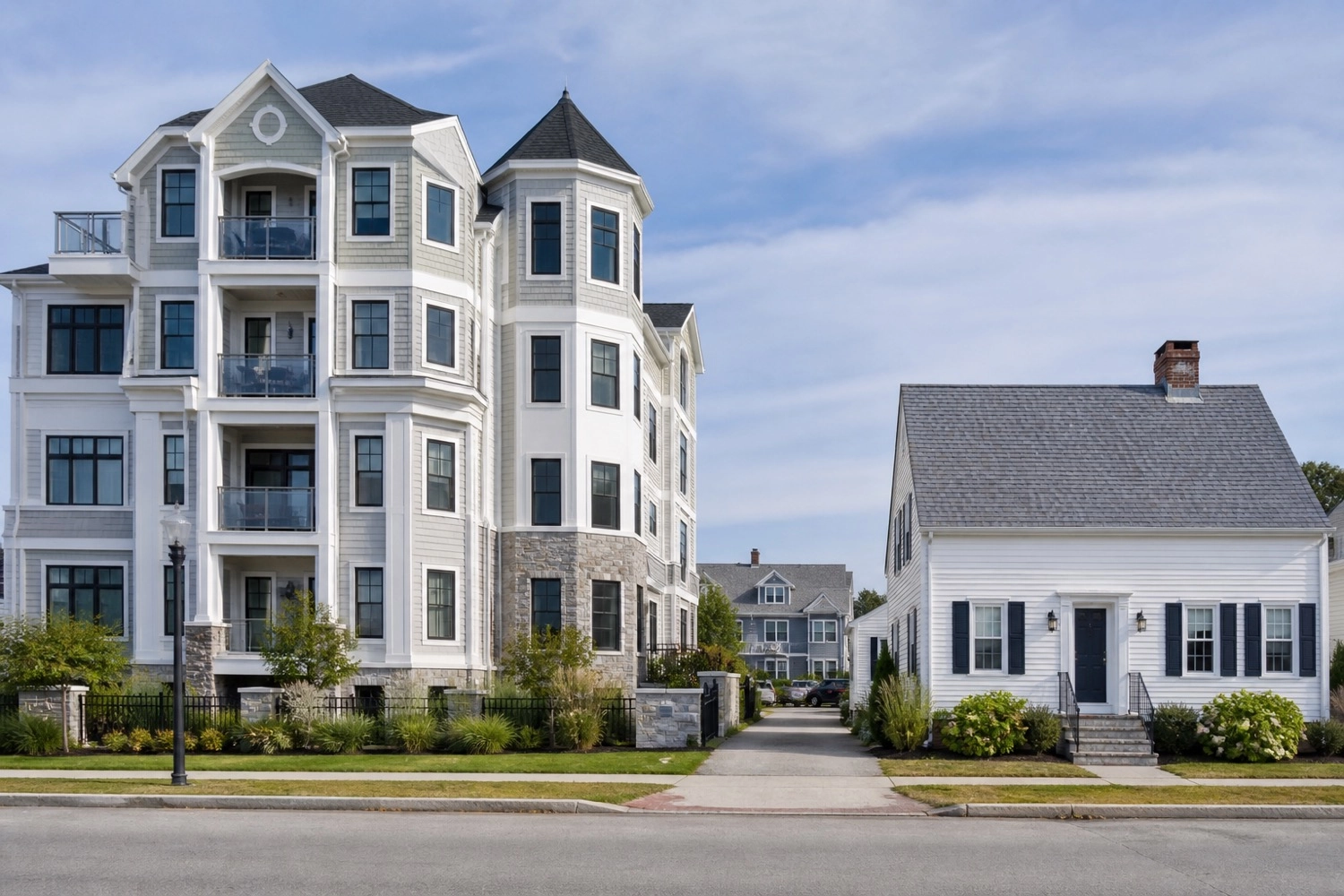
Exeter buyers commonly compare historic in-town homes, conventional neighborhoods, condominiums, newer planned communities, and rural-edge parcels. Portsmouth buyers encounter dense historic districts, downtown and West End condominiums, traditional residential streets, waterfront settings, and limited land. Compare similar property types rather than assuming a townwide price difference applies to every home.
Compare dated market reports
Use the Exeter market update and Portsmouth market update. Match property type and reporting period before comparing figures, then evaluate relevant individual listings and completed sales.
Historic-District and Renovation Considerations
Both communities have historic districts and older buildings. Before purchasing with renovation plans, confirm district boundaries, current design-review requirements, permitted use, parking, flood or wetland context, utilities, building systems, and prior permits for the exact parcel.
Transportation and Daily Travel
Exeter has direct Route 101 access and an Amtrak Downeaster station. Portsmouth connects with Interstate 95, Route 16, regional bus service, and surrounding coastal communities. Actual commute, parking, station, and seasonal travel conditions should be tested at relevant times rather than inferred from mileage.
Water and Outdoor Setting
Exeter's center sits along the Exeter and Squamscott rivers and the town includes forests, farms, trails, and conservation parcels. Portsmouth is shaped by the Piscataqua River, harbor, tidal ponds, and proximity to the Atlantic. In either community, flood zones, wetlands, drainage, shoreland rules, access, and insurance are property-specific.
How to Choose Between Exeter and Portsmouth
- Compare actual listings of the same property type, size, condition, and budget.
- Decide whether a town center or a denser small-city setting better supports your routine.
- Test rail, highway, parking, and daily travel patterns.
- Research historic, flood, wetland, utility, and permitting conditions by parcel.
- For condos, compare documents, reserves, insurance, assessments, and maintenance—not fees alone.
Exeter vs. Portsmouth FAQs
Which community is more walkable?
Both have walkable central areas, but walkability varies by address, route, season, and destination. Evaluate the actual property rather than applying a townwide label.
Which has passenger rail service?
Amtrak's Downeaster stops in Exeter. Portsmouth does not currently have an Amtrak station; verify current bus and regional transportation options directly.
Is one market less expensive?
Townwide medians reflect different inventories. Compare currently available homes with similar property type, location, condition, ownership structure, and total cost.
Explore Both Markets
- View Exeter homes
- View Portsmouth homes
- Read the Exeter guide
- Explore the New Hampshire Seacoast
- Ask Bean Group to compare properties
Equal Housing Opportunity. This objective comparison does not rank communities or describe protected-class demographics. Verify all market, municipal, school, insurance, transportation, and property information independently.
Search both communities
Current Exeter homes · Current Portsmouth homes
Check current station information with Amtrak Downeaster and test the actual connection from each home.
Your next move
Let’s plan your Portsmouth search.
Tell us what you are considering and where you need help. Our team can help you compare properties and organize the next steps.
Prefer to call? (800) 450-7784